Furniture Route Fit Calculator
Will My Furniture Fit Through the Door, Hallway or Stairs?
Check the full route before buying or moving large furniture.
Furniture Route Fit Calculator
Measure your route
Enter your item measurements and the tightest points in your route to estimate whether it may fit through the door, hallway, stairs or elevator.
Overall result
Likely fits
This is an estimate based on the measurements entered. Real-life moving conditions can vary.
Full route check
What this furniture fit calculator does
This furniture route fit calculator helps you estimate whether a large item may fit through the main parts of your route, including the doorway, hallway, stairs, landing or elevator.
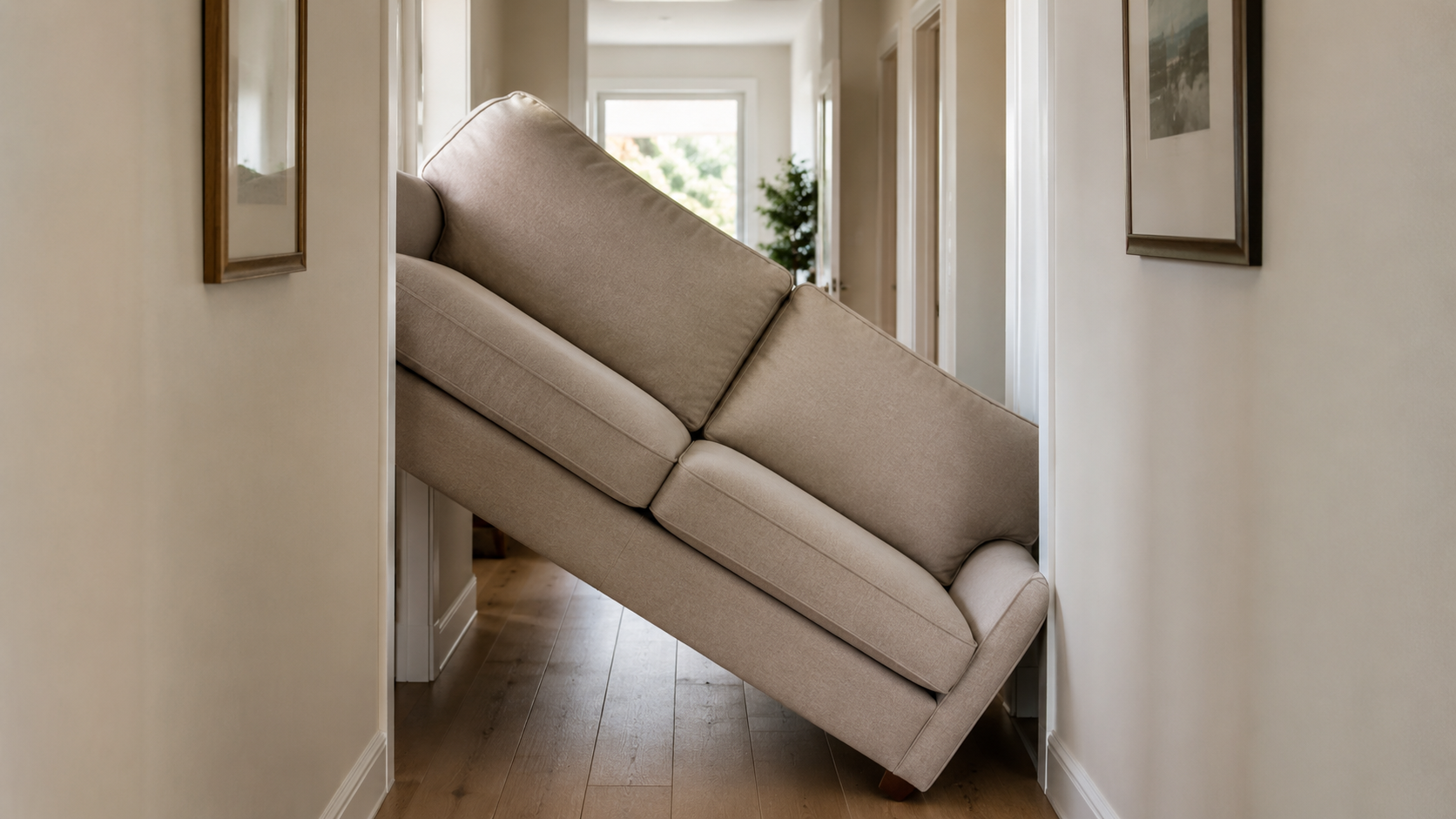
Instead of checking only the front door, the tool looks at the full route. A couch or sofa may fit through the door but still get stuck in a narrow hallway, stair turn, landing or elevator.
Before you measure
What you need to measure
For the best estimate, measure both the item and the tightest parts of the route.
Start with the item’s width, height and depth. Then measure the clear doorway width and height, the narrowest hallway width, the stair width, the landing size and the elevator interior if you plan to use one.
Use the smallest usable measurement, not the widest point. Door frames, handles, hinges, skirting boards, railings and wall angles can all reduce the real space available.
Moving route
Why the full route matters
Many moving problems happen after the item has already passed through the first door. The tightest point may be a hallway corner, a stair landing, a narrow turn or an elevator door.
Checking the full route before delivery or moving day can help you avoid returns, failed deliveries, damaged walls or furniture that gets stuck halfway.
Estimate logic
How the estimate works
The calculator compares your item measurements with the available space in each part of the route. It also applies a safety clearance margin so the result is more conservative.
Each checked part of the route receives a result such as likely fits, tight fit, possible problem or probably won’t fit. The overall result is based on the most difficult part of the route.
Understanding the result
What the result means
The measurements suggest there is enough clearance.
The item may fit, but the margin is small and you should measure again carefully.
The route shape, turn or landing may make the move difficult.
At least one checked part of the route appears too small for the item based on the measurements entered.
Common situations
Common situations this calculator can help with
Use this tool before buying or moving a large item such as a couch, sofa, mattress, bed frame, dresser, wardrobe, table, fridge or washing machine.
It can also help when you are trying to answer questions such as whether a couch will fit through a 30 inch door, whether a sofa can go up the stairs, whether a mattress will fit through a narrow hallway or whether a large item can fit in an elevator.
FAQ
Frequently asked questions
How do I know if my couch will fit through my door?
Measure the couch width, height and depth, then measure the clear width and height of the doorway. Use the smallest usable door measurement, not the full frame size. This calculator compares those measurements and applies a safety margin to estimate whether the couch is likely to fit.
How do I know if my sofa will fit up the stairs?
Measure the stair width, the landing width and the landing depth. A sofa may pass through the door but still get stuck on a stair turn or landing. If your stairs are L-shaped, U-shaped or very narrow, use a more conservative safety margin.
What size couch fits through a 30 inch door?
It depends on the couch shape and whether it can be tilted. As a rough estimate, the narrowest usable side of the couch should be smaller than the clear door width after leaving some safety clearance. Always measure the couch without relying only on product photos.
What size couch fits through a 32 inch door?
A 32 inch door may work for some sofas, especially if the legs are removable or the sofa can be tilted. However, arms, cushions, packaging, hinges and door frames can reduce the usable space. Measure the clear opening and compare it with the actual couch dimensions.
Should I measure the hallway or just the door?
You should measure the full route, not just the door. Many moving problems happen after the item has passed through the first doorway. Hallway turns, stair landings and elevator doors can be tighter than the entrance door.
Can removing sofa legs help it fit?
Yes, removing sofa legs or detachable parts can sometimes make a big difference. It may reduce the height or depth enough to pass through a doorway, hallway or stair turn. Always check the manufacturer’s instructions before removing parts.
How much clearance should I leave when moving furniture?
A small safety margin is recommended because real-life moving conditions are rarely perfect. Door frames, hinges, handles, railings, flooring and wall angles can all reduce the usable space. For a tight move, measure again carefully before delivery day.
Can this calculator guarantee that my furniture will fit?
No. This calculator provides an estimate based on the measurements you enter. Real-life delivery can be affected by furniture shape, packaging, wall angles, stairs, landings, flooring and how the item is carried.
Important note
Measure carefully before buying or moving
This calculator provides an estimate based on the measurements you enter. Real-life delivery or moving conditions can be affected by door frames, hinges, handles, wall angles, stairs, landings, flooring, packaging, furniture shape and how the item is carried.
Always measure carefully and confirm with your retailer, delivery team or mover before buying or moving large furniture.